Ask people to rate a brand film and they will talk about the images. Change the sound, and their rating changes dramatically – without them knowing why. Audio is the invisible half of every film. Audiences forgive average pictures; they do not forgive bad sound.
Why sound decides how a film feels
Music sets emotion before the brain has processed the image. A voice creates trust – or distance – within a sentence. Room tone, footsteps, the click of a machine make a scene feel real. When sound is wrong – hum, echo, music that fights the story – viewers feel uncomfortable and click away, even if they could not name the problem.
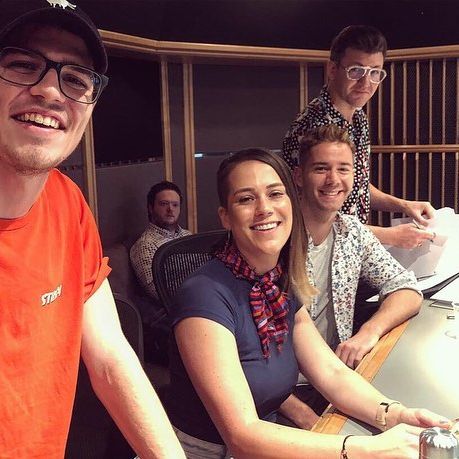
Our team has recorded songs and script for Spellbound, produced choir recordings for the We Are The World tribute and created music videos for Disney musicals. The same standards go into every brand film.
The four layers of film sound
1. Dialogue and voice
Interviews, on-screen speech and voice-over carry the information. They must be clear, natural and consistent in level.
2. Ambience
The sound of the place: a workshop, a café, wind on a rooftop. Ambience creates presence and glues cuts together.
3. Sound effects and foley
Details that make actions tangible – a door, a coffee cup, a keyboard, fabric. Often enhanced or recreated in post-production.
4. Music
The emotional engine. It shapes rhythm, marks turning points and gives the film its identity.
Getting it right on set
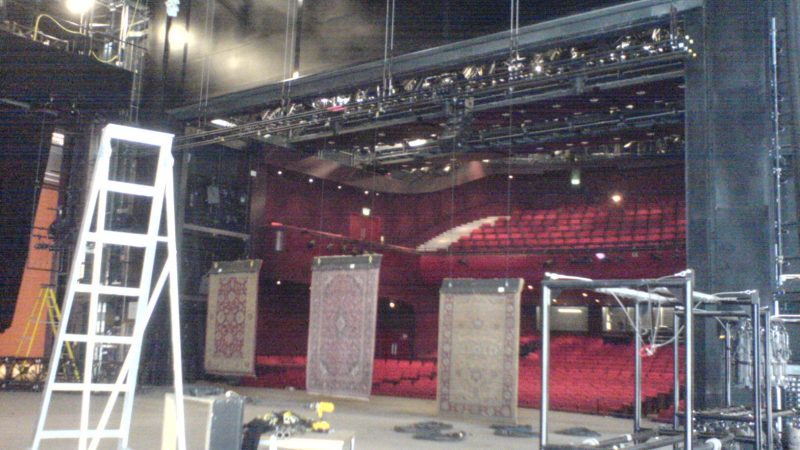
- Choose quiet rooms for interviews: carpets, curtains and furniture reduce echo; avoid glass boxes and empty halls.
- Switch off air conditioning, fridges, phones and notifications during takes.
- Use two microphones for interviews – a lavalier and a boom – for safety and choice.
- Record room tone: 30 seconds of silence in every location for the edit.
- Monitor with headphones at all times; problems found later are expensive.
- Capture wild sound: the specific sounds of the place, recorded separately.
Voice-over: casting and recording
A voice-over is the voice of your brand. Before casting, describe the personality: warm or authoritative? Young or experienced? Conversational or formal? Then:
- Listen to several voices reading your script, not their demo reel.
- Record in a treated booth, not a meeting room.
- Direct the speaker: explain the story, the audience and the emotion of each section.
- Record alternatives for key lines – emphasis changes meaning.
- Plan language versions early; German texts are usually longer than English.
Tip: read your script out loud before recording. If you run out of breath or stumble, so will the audience.
Music: library or original?
| Library music | Original composition | |
|---|---|---|
| Cost | Lower | Higher, but predictable |
| Speed | Immediate | 1–3 weeks |
| Uniqueness | Others may use the same track | Exclusively yours |
| Fit to the edit | Edit follows the music | Music follows the story |
| Rights | Check licence scope carefully | Agreed in the contract |
For campaigns and series, an original theme pays off: it becomes a recognisable sonic signature across every episode. For a single social clip, carefully chosen library music is often enough.
Licensing pitfalls
- A licence for “online” may not include paid advertising.
- Some licences are limited in time or territory.
- Commercial chart music requires separate rights for the composition and the recording.
- Platforms detect unlicensed music and may mute or block your video.
- In Germany, GEMA rules can apply to events and broadcasts – clarify early.
Mixing for the real world
Most brand films are watched on phones and laptops, often with small speakers or cheap earbuds. We mix accordingly:
- Dialogue always on top – music ducks under speech.
- Check the mix on phone speakers, laptop and headphones.
- Normalise loudness for each platform so your film is neither too quiet nor distorted.
- Deliver separate stems (dialogue, music, effects) for future edits and language versions.
Design for silence, reward the sound
Many viewers start videos muted. That is why we design films to work without sound – with subtitles and visual storytelling – and then reward those who turn the sound on with music and detail that deepen the experience. Both are part of the same craft; read more in What Is a Micromovie?
FAQ
Can you record voice-overs in several languages?
Yes – English, German and Dutch with native speakers, plus other languages through our network.
Do you compose music in-house?
Our creative director works across film and music; together with partner composers and studios we create original scores for brand films, campaigns and events.
Can you fix bad audio from existing footage?
Often yes, with restoration tools and careful editing – but prevention on set is always better and cheaper.
Want your brand to sound as good as it looks? Talk to us about music and sound.
Ready to see your story unfold?
Tell us about your brand and we will sketch a first idea for your micromovie – free and without obligation.
Start project